
Key Takeaways
- The Global Professional Breathwork Alliance (GPBA) sets 400 hours as the standard for a full practitioner credential — not a weekend intensive.
- Legitimate programs must include supervised live facilitation, not just video modules or reading.
- Trauma-informed facilitation is non-negotiable. Breathwork regularly surfaces suppressed emotion and trauma responses.
- A program that doesn't cover contraindications and scope of practice is not preparing you for real clinical work.
- Certification is not the endpoint — the best programs offer ongoing mentorship and peer community after graduation.
- The global wellness economy hit $6.8 trillion in 2024, per the Global Wellness Institute, flooding the field with new credentials and courses, making rigorous evaluation more important than ever.
You've been practicing for a while. The sessions affect you. People close to you have noticed. Some have asked what you're doing, what's shifted, if you could teach them — and whether breathwork certification is the next step.
And something in you knows: this is what you want to do with your time.
So you start looking at breathwork certification programs. And then the confusion starts.
Weekend intensives. Six-month mentorships. Self-paced online courses. Two-day modules that call themselves practitioner training. Prices from $400 to $8,000. Programs backed by instructors who have been teaching since the 1970s, and programs backed by people who discovered breathwork three years ago on social media.
The global wellness economy hit $6.8 trillion in 2024, according to the Global Wellness Institute — and it's projected to reach $9.8 trillion by 2029. That growth has flooded the field with new certifications, new programs, and varying levels of rigor. Quality ranges dramatically.
How do you tell the difference between a training that prepares you to hold space for someone in genuine transformation, and one that teaches breathing patterns while avoiding the hard questions?
This is that guide.
What a Real Breathwork Certification Prepares You For
The Global Professional Breathwork Alliance sets 400 supervised hours as the standard for a full practitioner credential, reflecting what it actually takes to guide another person's breath practice safely. Many training programs fall well short of this. Understanding what those hours must cover is the first step in evaluating any credential.
A breath session is not a fitness class. People cry. They access memories they have not touched in years. They shake, go silent, ask hard questions, or need someone steady when the breath takes them somewhere unexpected. The job of a certified instructor is not to lead someone through breathing patterns: it is to hold safe, skilled, informed space for another person's process. That requires a specific kind of preparation that videos and reading alone cannot provide.
The Supervised Hours That Actually Prepare You
Theory, in other words, is not enough. You need live practice with actual clients, under a supervisor who can see when you're pulling a session in the wrong direction. Hours matter, and not all hours are equal. A curriculum with 200 self-paced video hours is not the same as 200 hours of supervised live practice.
Look for programs that specify:
- How many hours of supervised live facilitation (as practitioner, not just as participant)
- How feedback on your practice sessions is delivered
- Whether supervision is in-person, live video, or asynchronous review
What "Trauma-Informed" Actually Means in Practice
Breathwork regularly surfaces stored emotion, often without warning. "Trauma-informed" is not a marketing phrase. It is a specific set of skills that includes recognizing early signs of overwhelm or dissociation in a client, knowing when to slow down or stop a session, and having clear referral pathways when what arises exceeds the scope of breathwork practice.
Indeed, the National Center for Complementary and Integrative Health (NCCIH) consistently emphasizes trauma-sensitive approaches in somatic and mind-body practice. Peer-reviewed research by Brown and Gerbarg (2009, Journal of Alternative and Complementary Medicine) confirmed yoga-based breathing interventions significantly reduced PTSD symptoms in mass disaster survivors, underscoring how powerfully the breath accesses trauma stored in the body, and why facilitators without trauma training are genuinely unprepared. Any breathwork certification that doesn't include explicit, practical training in this area is not preparing practitioners for real work with real people.
Specifically, trauma-informed facilitation includes:
- Establishing safety and consent before any session begins
- Reading body language and involuntary responses in real time
- Grounding and integration techniques for when sessions are intense
- Clear understanding of scope of practice, including when to refer to a therapist or medical professional
Physiological Knowledge That Protects Your Clients
In practice, CO2 tolerance, the autonomic nervous system, the window of tolerance, cardiovascular contraindications: not for lecturing clients, but for making safe decisions in real time. A practitioner who doesn't understand why certain breathing patterns can trigger panic, light-headedness, or cardiovascular stress is not equipped to lead those breathing patterns responsibly.
Three Questions to Ask Any Program Before You Enroll
Currently, breathwork certification programs range from 50 hours to over 800 hours, with prices from a few hundred to several thousand dollars. Before investing time or money, three specific questions will tell you most of what you need to know.
1. How many supervised facilitation hours are included — and how is supervision structured?
In short, reading about breathwork is not the same as running sessions. A course built primarily on video modules and reading materials is not preparing you to sit with a client in a meaningful way. Ask specifically: how many hours of live supervised practice are included? And who supervises: the lead instructor, a teaching assistant, or no one?
2. Who are the teachers, and what is their lineage?
Historically, breathwork has a traceable lineage. Leonard Orr developed Rebirthing in the 1970s. Stan Grof created Holotropic Breathwork. The Pranayama traditions run back centuries. The field grew through direct transmission: supervised practice, personal process work, years with lineage holders.
For example, a teacher who has only learned from online courses is passing on what they've read, not what they've lived. Ask directly: who trained them? How many people have they worked with? What does their personal practice history look like? Understanding breathwork's roots helps you ask the right questions about any program's credibility.
3. What happens after graduation?
Importantly, real skill develops long after a formal qualification ends. Does the training offer peer communities? Advanced modules? Mentorship you can access when something happens in a session you've never encountered before? A credential is not an endpoint. It is the beginning of a practice that needs ongoing support.
Related: Breathwork for Beginners: The 5 Most Common Mistakes: understanding what beginners struggle with helps practitioners anticipate the real challenges they need to manage.
Green Lights and Red Flags: A Side-by-Side Reference
Fortunately, evaluating programs is easier with a clear framework. The difference between a rigorous qualification and a credential-in-name-only usually comes down to a handful of specific indicators. The table below reflects GPBA standards and feedback from working practitioners.
| ✅ Green Light | 🚩 Red Flag |
|---|---|
| 100+ supervised practice hours | "Full certification" in a weekend |
| Live supervision with real feedback | Video modules only, no live component |
| Explicit trauma-informed facilitation training | No mention of trauma, boundaries, or scope |
| Clear contraindications coverage | Safety covered in a footnote or not at all |
| Instructors with 5+ years active practice | Instructor is primarily a course creator, not a practitioner |
| Ongoing community or mentorship post-graduation | No support after the course ends |
One simple test separates programs that take safety seriously from those that treat it as marketing copy: email the training and ask specifically how their curriculum addresses trauma-informed facilitation. Ask for examples of how students learn to recognize dissociation, manage emotional activation, or determine when to end a session early. The response, and how quickly it comes, tells you a great deal. Programs with real substance in this area answer with specifics: module names, hours allocated, supervision structure. Programs that haven't thought it through give vague reassurances. As a result, this single question does more filtering work than reading any sales page.
A Practice to Try Before You Decide
Before investing in any breathwork certification, try this for three minutes. In practice, most aspiring practitioners discover more about their readiness through direct experience than through program comparison. The Global Wellness Institute projects the wellness economy will reach $9.8 trillion by 2029. That proliferation makes direct experience your single most reliable filter before enrolling anywhere. It demonstrates the two foundations every serious program is built on.
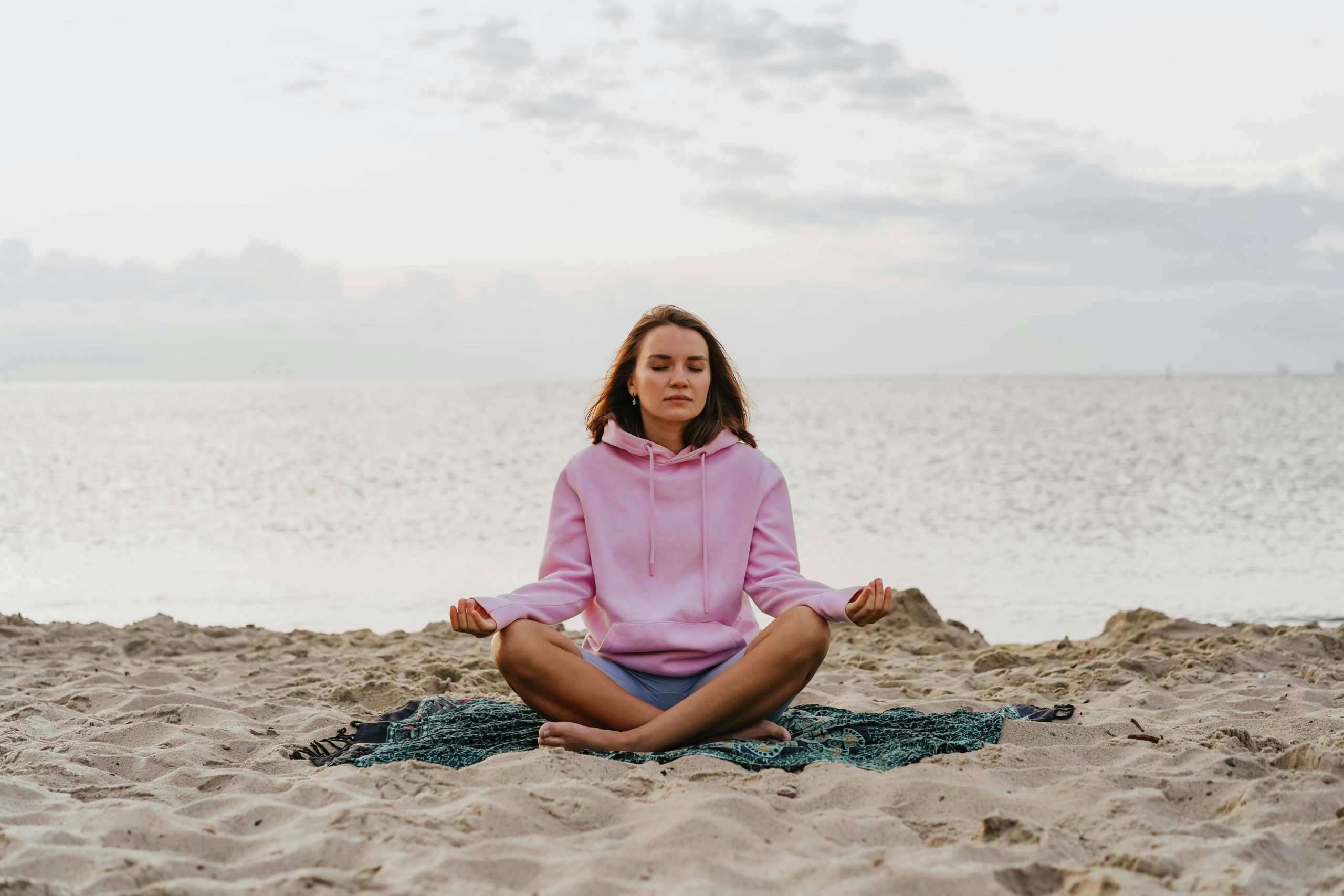
To begin, sit comfortably with your eyes closed. Without changing anything, simply observe your breath. Notice where it moves: belly, chest, or throat. Notice if it is fast or slow, smooth or jagged, quiet or audible. Notice what happens when you pay attention to it without interfering.
After three minutes, take a long, slow exhale — longer than the inhale. Repeat three times.
When ready, open your eyes.
What you just did demonstrates the two pillars this entire field is built on: Breath Awareness (observing without controlling) and Conscious Breathing (directing with intention). Every serious practitioner training returns to these two foundations again and again. If something shifted in those three minutes, you understand why people seek this work out. That's what you'd be helping others access.
For a deeper introduction to these principles before committing to a certification, Mastering the Breath ($97) walks you through both pillars with structured daily sessions — used by over 10,000 students as exactly that kind of pre-certification foundation.

What Dan Brulé's Breathwork Certification Program Covers
I spent more than 50 years building the knowledge that went into the Breath Mastery practitioner curriculum. I trained with Leonard Orr among the original certified Rebirthers, studied Holotropic Breathwork directly under Stan Grof, trained with Swami Rama at the Himalayan Institute, and was invited by Master Hu Bin to study medical Chi Kung at the Beijing Academy of Chinese Medicine in 1985. Over that time, I have guided breathwork for more than 300,000 people across 73 countries, including Tony Robbins. What I learned from all of it shaped every element of this training.
Consequently, the Breath Mastery One Year Practitioner Certification Program was designed with that depth as its foundation. Over twelve months, participants work through:
- The Two Pillars: Breath Awareness and Conscious Breathing, as a complete teaching system
- Individual techniques with both physiological and energetic context
- Trauma-informed facilitation: what to watch for, how to respond, when to refer
- Live supervised practice with real feedback on real sessions
- Personal breathwork process work: a practitioner cannot take a client deeper than they themselves have gone
- Ethics, professional boundaries, and scope of practice
- Guidance on building a sustainable breathwork practice and career
In practice, practitioners who complete the program report not just technical competence, but a qualitative shift in how they hold space for others: less reactive, more attuned, and better equipped for the unexpected moments that define real sessions. That shift is what formal supervised practice (not modules alone) makes possible.
What to Expect in Year One as a Practitioner
Year one in a serious certification program follows a predictable structure. Understanding what breathwork certification training looks like month-by-month is one of the most practical steps you can take before enrolling anywhere. GPBA-standard programs require 400 mentored hours, and the best programs deliver that depth in a structured progression over twelve months. The four-phase structure below reflects what that preparation actually requires and produces, so you know exactly what you are investing in and what to ask about.
- Months 1–3: Foundation and self-practice. The first phase is largely about your own breathwork: deepening personal practice, understanding your own patterns and responses, identifying what your body does under different breathing conditions. You cannot safely guide what you haven't experienced yourself.
- Months 4–6: Technique and physiology. Specific techniques are introduced with their physiological mechanisms, including CO2 mechanics, the autonomic nervous system, the window of tolerance. You begin supervised practice with partners in the cohort, receiving structured feedback.
- Months 7–9: Client sessions with supervision. Practice sessions with external clients begin under direct supervision. This is where theory meets reality. Unexpected responses (emotional release, dissociation, resistance, transference) appear here. Supervision is most intensive during this phase.
- Months 10–12: Ethics, integration, and graduation. Scope of practice, professional ethics, business development, and integration of everything learned. Graduation marks the beginning of independent practice, supported by an ongoing community.
In breathwork, steady practice over time goes further than an intense weekend ever will.
Frequently Asked Questions
Do I need prior breathwork experience before enrolling in a certification program?
Most serious programs strongly recommend personal breathwork experience before training begins. The practical reason: the more of your own process work you've done, the safer and more grounded you'll be as a facilitator. You cannot take a client somewhere you haven't gone yourself. Starting with a beginner course or sessions with an experienced practitioner is a smart first step.
How many hours does a legitimate breathwork certification require?
The Global Professional Breathwork Alliance (GPBA) sets 400 hours as the standard for a full practitioner credential, including supervised practice hours. Foundational facilitator certificates start at 50 hours. Clinical breathwork certifications run 800 hours or more. Anything claiming "full certification" in under 100 hours deserves careful scrutiny.
Is online breathwork certification legitimate?
There is no single global regulatory body that accredits breathwork certifications across traditions. What matters most is program quality: the experience of the instructors, supervised practice hours included, whether the curriculum covers trauma-informed facilitation, and what support exists after completion. A rigorous online program from lineage-trained instructors often provides more genuine preparation than an in-person weekend intensive with no supervision or follow-up.
Can I teach breathwork without certification?
Legally, breathwork is not regulated in most countries. But running breathwork sessions, especially connected or holotropic-style practices, without training carries real risks. Breathwork regularly surfaces suppressed emotion and trauma. Untrained facilitators may not recognize contraindications, manage activation, or know when to refer. Certification is not just a credential; it's preparation for the complexity of the work.
What can you do professionally with a breathwork certification?
Certified practitioners work in private client practice, corporate wellness settings, retreat centers, yoga studios, healthcare-adjacent programs, and online platforms. The range of professional settings available depends on two factors: training depth and any complementary professional background, such as therapy, coaching, somatic work, or nursing. Many practitioners integrate breathwork into an existing professional role rather than building a standalone practice from zero. For those starting fresh, the most successful early-career paths combine breath practice with a complementary skill set — coaching, yoga instruction, or bodywork — rather than relying on a single credential alone. Mentored hours, lineage training, and a clear scope of practice open more doors than a program's name alone.
How long does breathwork certification take?
Worthwhile programs run between six months and two years. Anything shorter than 100 total hours, including mentored client sessions, raises genuine questions about depth. The Global Professional Breathwork Alliance sets 400 hours as the full practitioner standard, which most serious programs deliver over twelve to eighteen months. Faster programs are not inherently better; accelerated timelines often compress or eliminate the supervised client hours where practitioners develop the skills that matter most. Programs with ongoing mentorship and peer community after graduation consistently produce more capable practitioners than those with a fixed endpoint and no continued support structure. When comparing timelines, ask what specifically fills those hours: video modules and reading do not substitute for live supervised practice.
This post was reviewed for accuracy by Dan Brulé and reflects curriculum standards as of March 2026. See our about page for editorial standards.
Breathwork is not a substitute for professional medical or mental health care. Connected breathing practices and extended breath holds are not appropriate for everyone. Anyone with cardiovascular conditions, a history of seizures or epilepsy, pregnancy, recent surgery, or serious mental illness in acute destabilization should speak with a qualified healthcare provider before beginning any breathwork practice. Breathwork practitioners are not licensed therapists or medical professionals unless they hold separate credentials in those fields.
If you're ready to invest in a breathwork certification that prepares you for real work with real people, the Breath Mastery One Year Practitioner Certification Program is where that preparation happens.
If you're earlier in the journey and want to deepen your own practice before training others, Breath & Beyond ($97) is a focused starting point. For the most thorough preparation available before entering formal practitioner training, Dan Brulé's Breathwork Legacy Collection ($397) covers 500+ lessons across every technique, modality, and application you'll encounter as a practitioner.
Further reading:
