

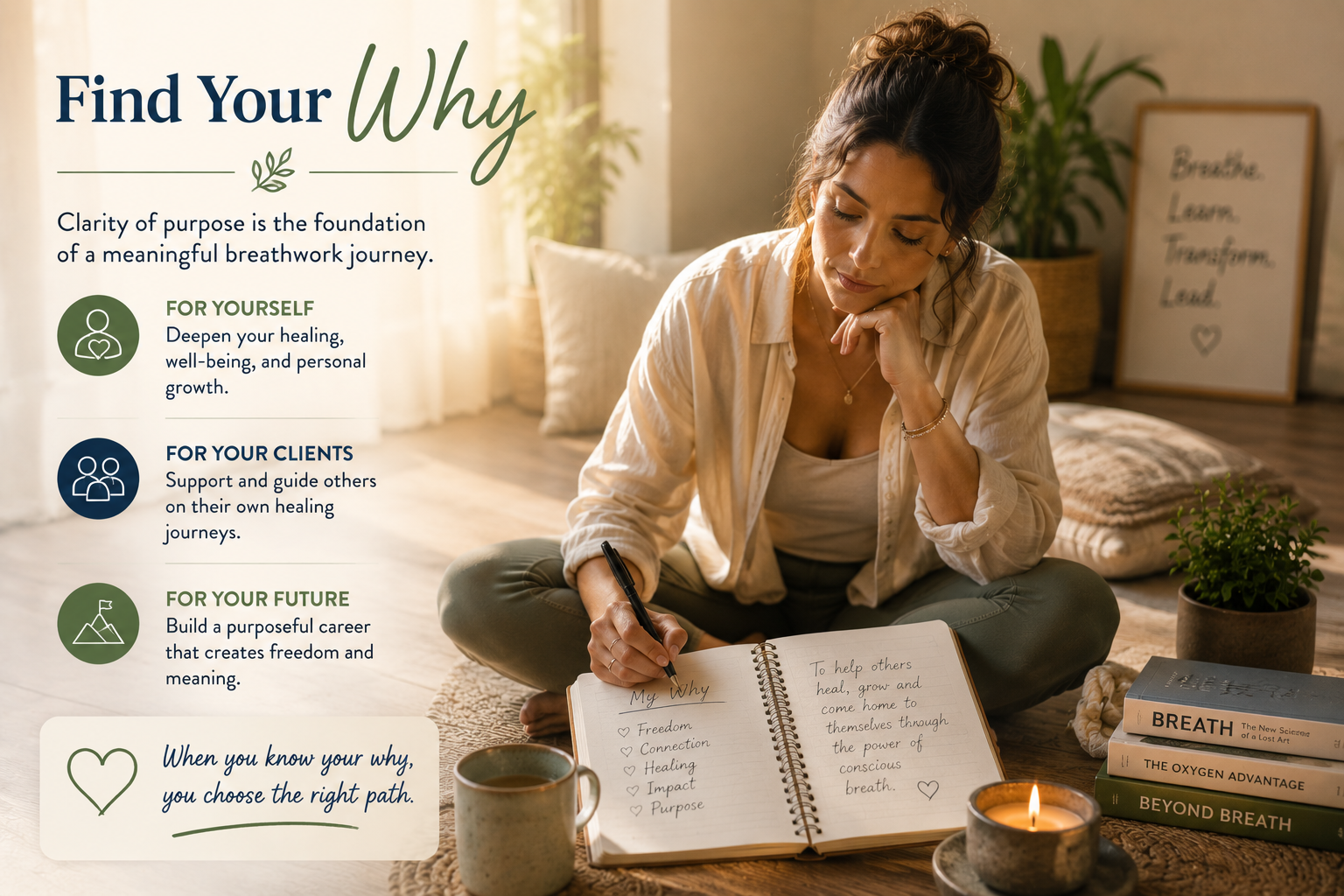
The decision to step onto the path of facilitating the breath is an initiation. It is not simply about adding another tool to a coaching toolkit or learning a new set of physical exercises to offer clients. When you commit to a breathwork certification program, you are stepping into an ancient line of transmission, learning to guide others through the doorway of their own life force.
At Breath Mastery, where we have trained over 250,000 students across 67 countries and certified more than 2,000 teachers, coaches, and facilitators, we see the breath as the foundation of all human experience. Whether you are exploring an online breathwork certification to deepen your personal practice or feeling called to step into a professional role through a breathwork coach certification, this training reshapes how you relate to yourself and how you serve others.
The Dual Mastery: Harmonizing Physiology and Spirit
To guide another person in conscious breathing, a practitioner must hold two realms at once: the mechanical reality of the body and the sacred depth of human consciousness. A grounded training honors both.
- Understanding the Physical Instrument: You learn the precise mechanics of the respiratory system. The movement of the diaphragm, the mechanics of the intercostal muscles, and the dynamics of the thoracic pump. You study how intentional breathing patterns directly regulate the autonomic nervous system, shift blood pressure, and influence heart rate variability (HRV). Through coherent breathing, we see how the breath creates a physical wave, the Valsalva wave, that eases the workload of the heart and lowers systemic stress.
- Opening to the Sacred: At the same time, we honor the truth that the breath is spiritus, the animating principle of life. In a breathwork certification online or in-person setting, you learn to track how the breath opens the subtle channels of the body, moving prana, chi, and Divine Energy. You learn to guide clients into theta-dominant brain states, the awakened mind, where deep intuition, emotional release, and spiritual awareness naturally emerge.
Core Capabilities You Develop as a Certified Practitioner
Stepping into a formal breathwork coach certification equips you with both technical precision and deep intuitive presence.
| Capability | What You Master in Practice |
| Technique Mastery | Navigating Conscious Connected Breathing, Rebirthing Breathwork, Coherent Breathing, and the 20 Connected Breaths exercise. |
| Nervous System Regulation | Understanding how to track autonomic shifts, helping clients safely discharge stress and navigate the fight-or-flight response. |
| Somatic Observation | Reading the physical body—learning to track the six bridges (face, tongue/throat, hands, diaphragm, pelvic floor, and feet) to release held tension. |
| Space Holding & Presence | Developing the capacity to stay grounded, calm, and present while a client navigates intense emotional or cellular releases. |
| Custom Practice Design | Tailoring specific breathing patterns, active inhales, and passive exhales to meet the unique physical and emotional needs of individual clients. |
Practitioner Note:
When you are sitting with a client, see through the illusion of their limitations. See the powerful divine being of light that is before you. Look with seeing eyes. When breathing with others, be your real true self, feel your connection to them, and remember to love.
 The Transformative Benefits of Certification
Choosing to become a certified breathwork practitioner transforms your work from the inside out:
- A Practice Rooted in Lineage and Science: You move beyond quick tricks or superficial relaxation exercises. You gain an understanding of techniques refined over decades, grounded in both physiological science and traditional lineage, from the Rebirthing movements established by Leonard Orr to modern HRV research by pioneers like Stephen Elliott.
- Confidence in Guided Navigation: Holding space for deep somatic work requires deep experiential knowledge. Certification prepares you to stay present with whatever arises during a session, whether a client experiences intense emotional catharsis, physical tetany, or profound spiritual stillness.
- Versatility Across Healing Modalities: Breathwork integrates into existing work as a psychotherapist, bodyworker, yoga instructor, or executive coach. The breath is foundational; once you understand how to use it, every other modality you practice becomes more effective.
- Joining a Global Community of Practice: Becoming certified connects you to an international network of facilitators and mentors. You join a global family of practitioners devoted to serving humanity through the simple, profound power of the breath.
Healing and transforming through the breath is not difficult or complicated. Everything happens naturally when the conditions are right. If you tend to the breath, the breath will take care of everything else.
FAQs
What makes a breathwork certification program authentic and grounded?
An authentic training honors both science and Spirit. It provides a clear understanding of functional respiratory physiology, such as diaphragmatic mechanics, heart rate variability (HRV), and nervous system regulation, while honoring the breath as spiritus, the animating life force. Look for programs with an established lineage, direct experiential practice, and an emphasis on real space-holding skills.
Can I complete a breathwork certification online?
Online learning can support your path, but breathwork is fundamentally an initiation passed down through direct, live experience. We use online study for foundational theory and anatomy, making sure it complements rather than replaces the experiential practice required to hold space safely for others.
What is the difference between a breathwork coach, practitioner, and facilitator?
While titles vary across schools, a breathwork coach typically focuses on integrating functional breathing patterns for daily performance, stress management, and nervous system regulation. A practitioner or facilitator is trained to hold space for deep somatic release, Conscious Connected Breathing, and Rebirthing sessions that touch on emotional, cellular, and spiritual transformation.
Do I need prior medical or coaching experience to enroll in a breathwork coach certification?
No prior medical background is required. Practitioners come from all walks of life: yoga teachers, therapists, bodyworkers, corporate leaders, and individuals seeking personal transformation. What matters most is a commitment to your own personal breath practice and a sincere willingness to serve others.
How long does it take to become a certified breathwork practitioner?
Program lengths vary depending on the depth of training. Certification pathways typically range from intensive multi-day skills trainings to multi-month immersion programs that include coursework, practice hours, case studies, and mentorship.

 If you just want personal growth, a quick weekend workshop might be plenty for you. But if you want to hold space for other people safely, you need a deep, comprehensive
 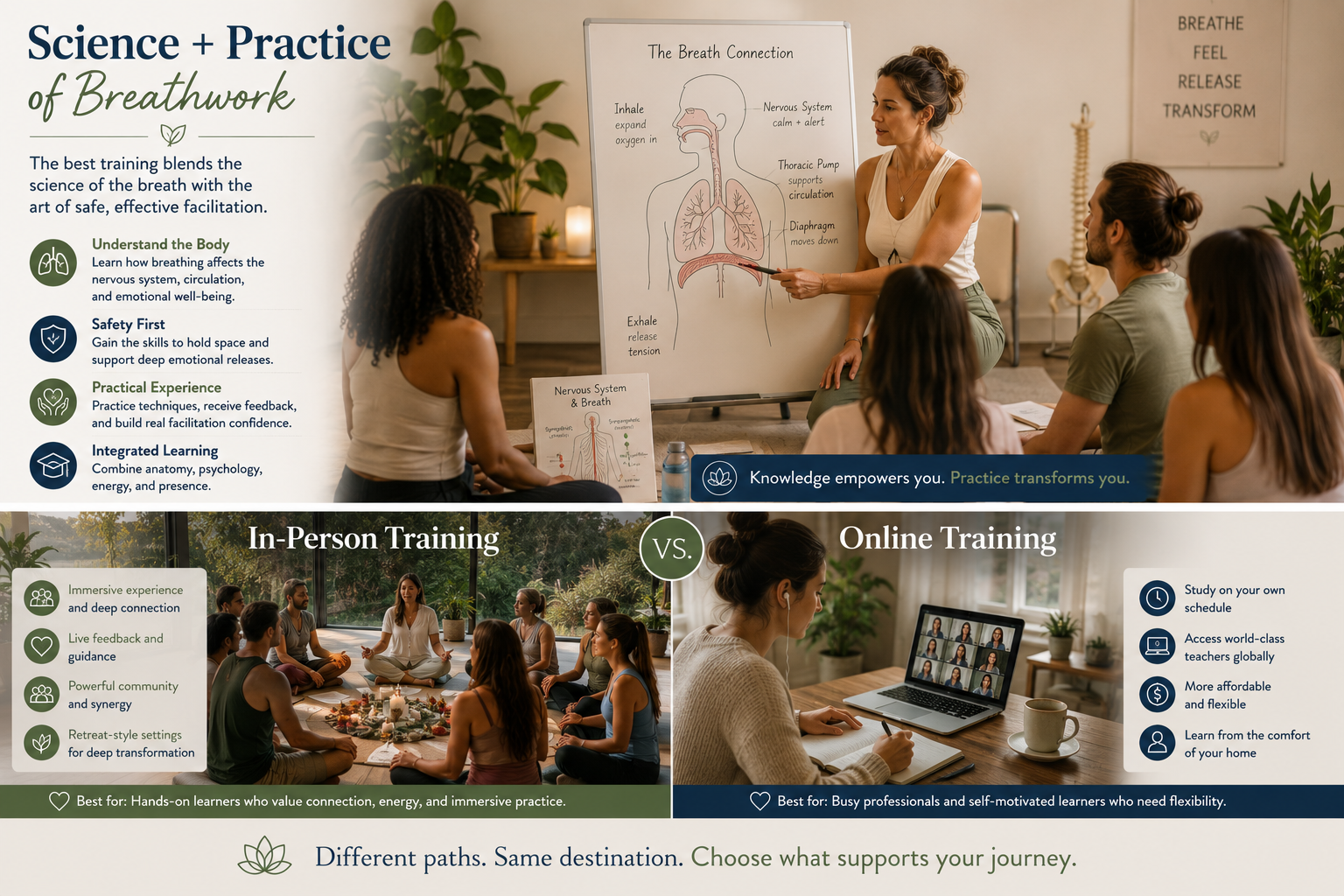 On the flip side, a breathwork certification online offers incredible flexibility. You can study at your own pace without quitting your day job or losing income. In-person retreats are highly expensive and rigid, but offer deep community bonding. Online paths require serious self-discipline but let you access global teachers easily.
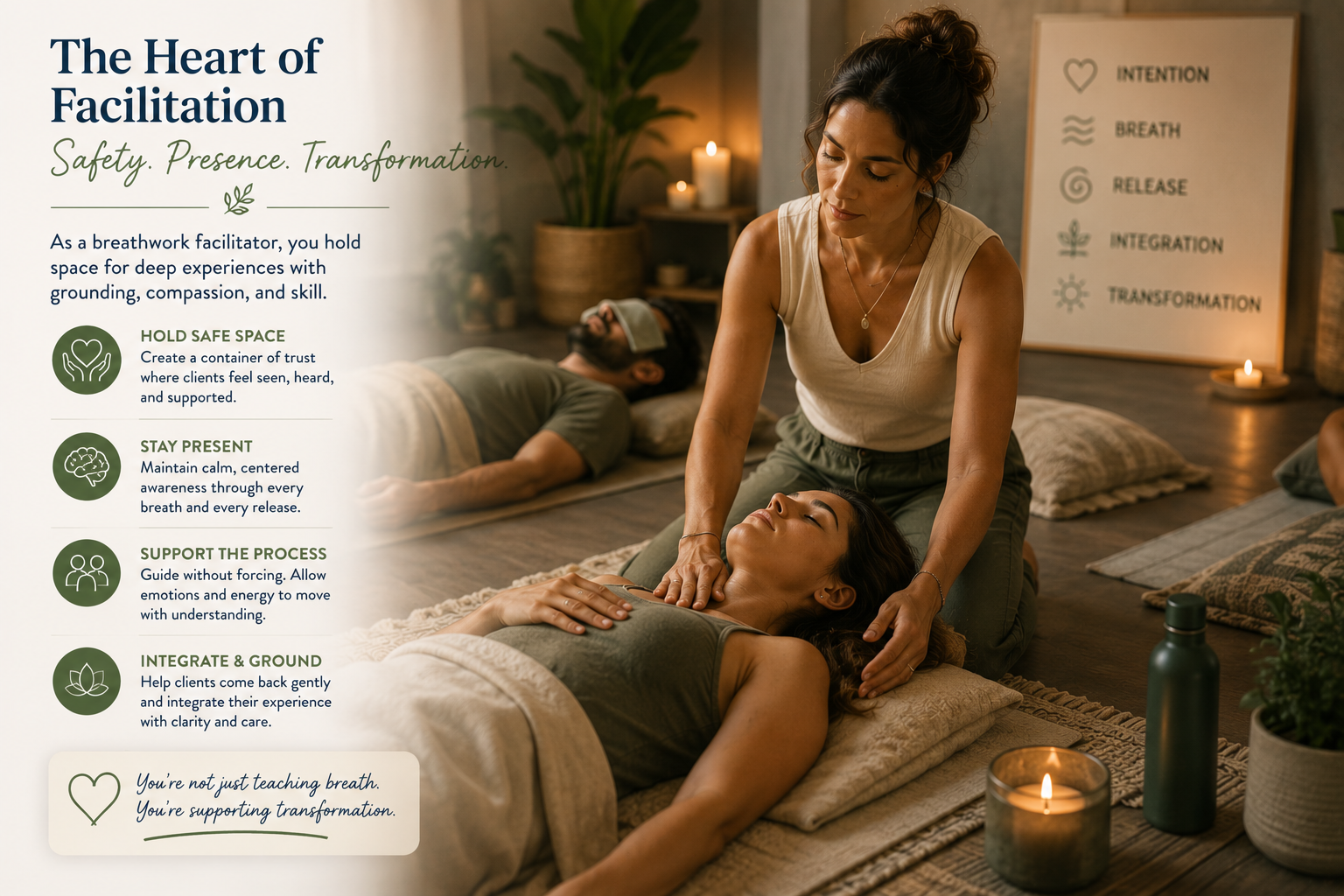 People will cry, shake, and confront deep-seated fears during your sessions. A solid breathwork facilitator training teaches you how to




Recent Comments