
Monthly Archives

December 2025

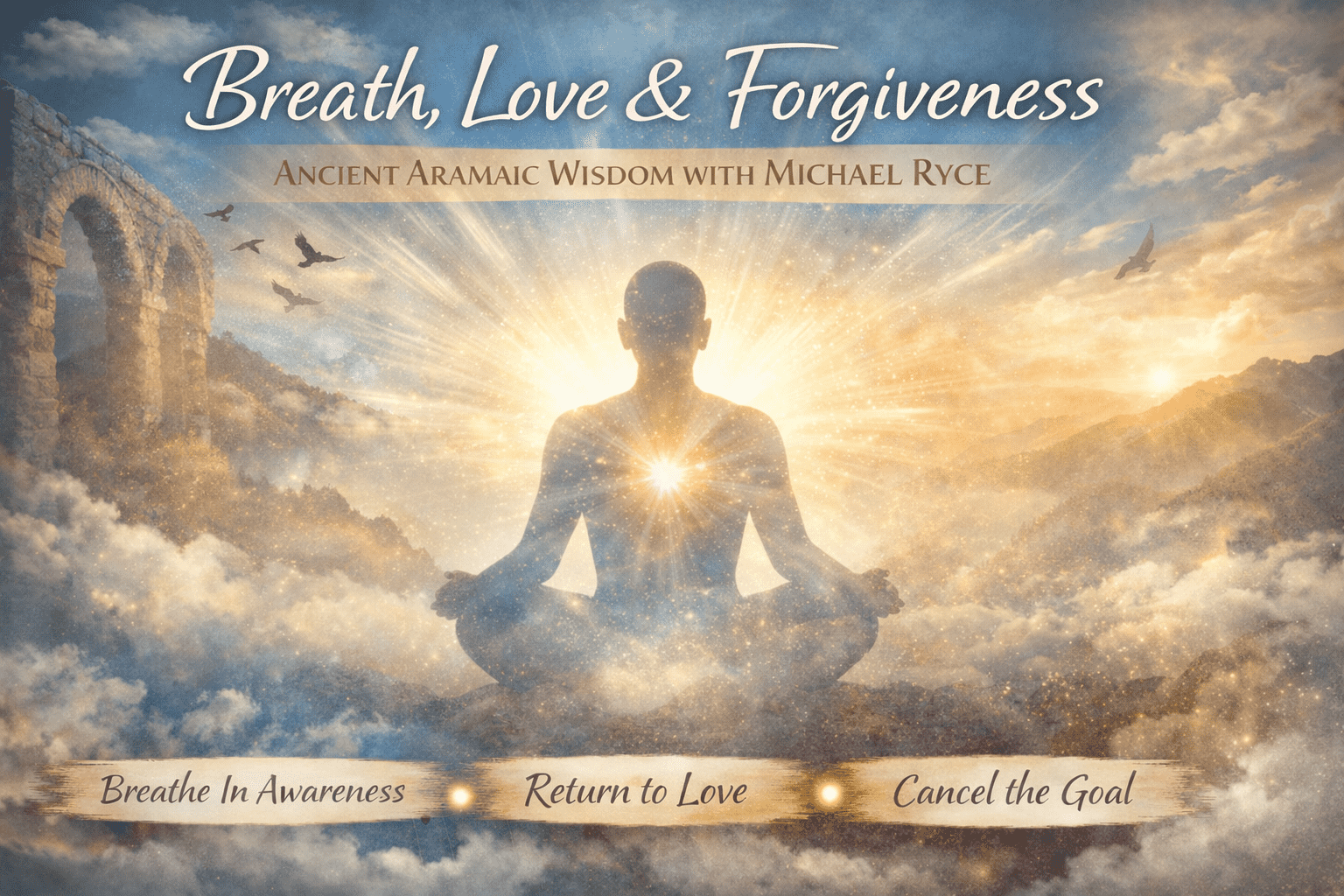
A silhouetted figure meditates with a glowing heart, surrounded by clouds, birds, and sunlight; text promotes "Breath, Love & Forgiveness" and related practices.

Notes on my Recent Meeting with Michael Ryce

By Blog No Comments

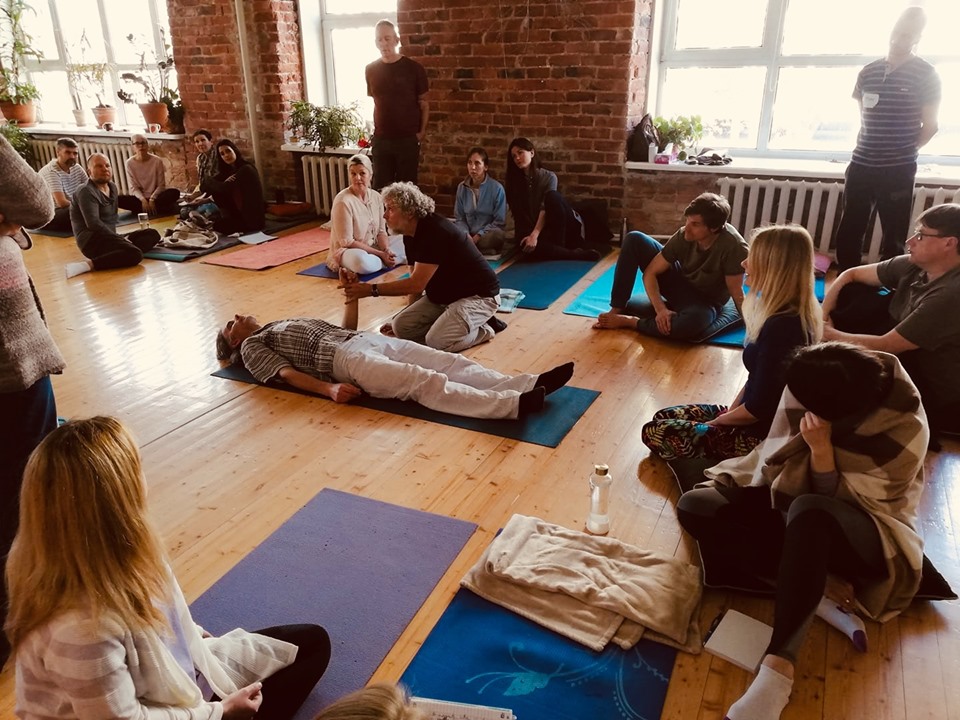
I recently spent two days in Virginia with Michael Ryce. He is an Aramaic scholar and the author of Why is this happening to Me…Again! Connecting with him is like breathing ancient wisdom through fresh lungs.

He has been such an inspiration to me over the years, and it was a gift to be able to exchange sessions and spend some quality time with him. So, this month, I’d like to share with you some of the insights and lessons I took away from our meeting.
Read More
deep breathing exercises for anxiety

How Quickly Can Deep Breathing Calm Anxiety Symptoms?

By Blog, Breathmastery No Comments

If you’ve ever had anxiety hit you out of nowhere, the tight chest, buzzing head, and that weird “something’s wrong” feeling you can’t name, you probably already know one thing: your body reacts way faster than your thoughts can keep up. And honestly, that’s the annoying part. Anxiety doesn’t knock first. It just barges in, kicks off its shoes, and makes a mess of your whole system.

But here’s the surprising thing: a lot of us figure out later than we should that deep breathing exercises for anxiety can calm that chaos way quicker than you’d expect.
Not in some magical, unicorn-sparkle kind of way. More like… giving your nervous system a hard reset. A simple switch. Something your body understands even when your mind is running laps.

And yeah, it sounds too basic, like “Just breathe” belongs on some overpriced mug. But the timing of it? The speed? That part is real.

Let’s break it down in simple, human terms. No fancy jargon. No weird spiritual fluff unless you’re into that. Just what actually happens and how fast it kicks in.

Your Body Freaks Out Fast. Breathing Calms It Faster.

When anxiety flares, your breathing usually goes shallow before you even notice. Quick, tiny chest breaths. It’s your fight-or-flight reflex, doing its thing even though you’re not wrestling a bear.

Deep breathing flips that reflex off.

Most people start feeling the shift in about 30 to 90 seconds. That’s quick.
Not total calm, but noticeable, like you just turned the volume down on your panic.

Why so fast?
Because breathing is one of the few things where your body immediately responds, you don’t need motivation. You don’t need a pep talk. You don’t need to “think positive.” You just take a slower breath, and your nervous system says, “Oh, okay, maybe we’re not dying.”

If only more things in life were that straightforward.

What Happens Inside the Body When You Slow Your Breathing

You don’t have to be a science nerd for this to make sense. Here’s the simple version:

  • Your heart rate starts dropping when your exhale gets longer.
  • Your muscles loosen because the brain stops firing danger signals.
  • The “calm down” branch of your nervous system switches back on.
  • Your thoughts stop racing quite so violently.

Deep breathing is basically your body’s built-in stop button.
You just have to remember to hit it.

And honestly, half the battle is remembering.

The Trick: You Need to Breathe “Right” for It to Work This Fast

A lot of us think we’re breathing deeply when we’re… really not.
Chest breathing doesn’t do much. It just moves air around and looks dramatic.

The stuff that actually helps anxiety fast is slow belly breathing, where the stomach rises, not the chest. Add a longer exhale, and that’s where the magic happens.

Here’s the easiest breathing technique for anxiety relief (kind of kills two birds with one breath):

The 4-6 Method

  • Breathe in for 4 seconds.
  • Breathe out for 6 seconds.
  • Repeat for 6–10 rounds.

Longer exhale tells your body: Stop panicking. We’re safe. Chill.

People use this before bed, before presentations, during panic attacks, in traffic when they’d rather not scream at strangers… all sorts of real-life situations.

deep breathing exercises

How Fast Does Calm Actually Kick In?

Here’s the real answer that no one prints on wellness posters:

  • First wave of relief: 30–90 seconds
    That’s when your heart rate starts to drop.
  • Clearer head: 2–3 minutes
    Your thinking gets less foggy, and you stop catastrophizing every scenario on planet Earth.
  • Steady calm: 5 minutes
    Your muscles loosen, your breathing resets, and the panic spike settles down.
  • Deep calm (the body is fully “offline” from stress): 10 minutes
    This is more like a full reboot, the kind that helps with stubborn anxiety or long days that pile up on you.

Do you always need 10 minutes? No.
Most people feel noticeably better way earlier.

But here’s the funny thing: once you feel that shift, you usually want to keep going because your body is like, “Finally, some peace.”

Why Deep Breathing Works Fast When Nothing Else Does

If you’ve tried talking yourself out of anxiety, you probably know the mental negotiation never works. Your brain during anxiety is like a toddler with a pair of scissors; nobody’s listening, and something is probably about to get ruined.

But breathing?
Breathing goes straight to the control center. No arguing, no bargaining.

It’s like:

  • Anxiety: We’re in danger, everything is bad, heart rate up, panic now, go go go!
  • Breathing: Nope. Sit down.

No fight. No debate. Just a hard override.

Deep Breathing Helps Anxiety, But It’s Also Sneaky Good for Sleep

Here’s something most people don’t realize until they try it:

When you slow your breath, especially the exhale, your whole system drops into “rest mode.”
That’s why people who do just three minutes of slow breathing before bed fall asleep faster. The brain goes quiet. The heart stops thumping. The body stops micromanaging imaginary threats.

It’s honestly one of the cheapest and most effective sleep hacks on earth.

Is Deep Breathing a Cure for Anxiety? No. But It’s a Hell of a Tool.

A breathing exercise isn’t going to fix childhood trauma or job stress or a toxic relationship. It won’t magically erase decades of worry patterns.

But it does give you power over the one thing anxiety hijacks first: your body.

When your body calms down, your mind has space to figure out the rest.

And having even a tiny bit of control during an anxiety spike?
That’s a big deal.

Common Mistakes People Make (That Slow Down Results)

People try deep breathing and then say it “didn’t work,” but usually, it’s one of these:

  1. Breathing too fast.
    Slow is literally the point.
  2. Breathing in too deeply.
    The inhale shouldn’t feel like you’re inflating a pool toy.
  3. Forgetting the longer exhale.
    This is the switch that calms the body. If the exhale is short, the body stays in panic mode.
  4. Doing it once and expecting lifelong peace.
    Consistency makes it work faster over time.
  5. Only doing it during anxiety attacks.
    Do it before things get intense; your body learns quicker.

Tiny adjustments make a massive difference.

Real Talk: How to Make Deep Breathing Part of Real Life

Life is busy. None of us is sitting cross-legged on beaches with incense at sunrise. So here’s how people actually fit breathing in:

  • Before sleep – 2–3 minutes to stop the brain chatter
  • In the car – especially before stressful stuff
  • At your desk – when emails start sounding hostile
  • In the shower – easy, and nobody can judge your weird breathing noises
  • During a panic spike – obviously
  • First thing in the morning – quick nervous system check-in

It doesn’t need to be fancy.
You don’t need a yoga mat.
You just need lungs. Which you already have. Congrats.

So, How Fast Does Deep Breathing Calm Anxiety?

Faster than most coping tools. Faster than most people expect.
It won’t erase the root problem, but it will interrupt the wave and pull you out before you drown in it.

And honestly, that’s enough to change a whole day.

Ready to Learn Powerful Breathing Techniques That Actually Work?

If you want deeper guidance and real methods that go beyond “take a deep breath,” you’ll want to check out Breath Mastery.

Your breath is the fastest tool you have for calming anxiety.
Might as well master it.

FAQs

1. How quickly can deep breathing reduce anxiety symptoms?

Most people feel the first shift within 30–90 seconds. Full calm usually takes 3–10 minutes, depending on how stressed your body is.

2. Which breathing technique works best during panic attacks?

Any slow breathing with a longer exhale, like the 4-6 method, is ideal. Long exhale = fast calming.

3. Can deep breathing help me sleep faster?

Yes. Breathing techniques for anxiety slow your heart rate and quiet your brain. A few minutes can make falling asleep much easier.

4. Do I need to practice daily for it to work?

Daily practice helps your body enter calm mode faster. But even one round helps during sudden anxiety.

5. What if breathing makes me feel more anxious at first?

Totally normal. Start with smaller, shorter breaths and less pressure. Your body adjusts with practice.


breathwork teacher training

How Can Breathwork Teacher Training Help You Build a Successful Wellness Business?

By Blog No Comments

If you look around lately, the wellness world is exploding. Everyone’s stressed, tired, exhausted, and overwhelmed… and honestly, looking for anything that brings actual relief instead of another shiny “fix” that doesn’t do much. And that’s exactly why breathwork has stepped into the spotlight again, except this time, people actually want to learn it properly, not just do a couple of deep inhales from a YouTube video and hope their life instantly sorts itself out.

So more folks are asking, “Can I really build a wellness business around breathwork?”
Short answer: yes, you can. A solid breathwork teacher training or breathwork coach certification doesn’t just teach you breathing patterns; it gives you tools, structure, and confidence to turn this thing into a legit, income-generating practice.

Let’s break it down in a straightforward, not-too-polished way.

Why Breathwork Is Having a Moment

People have hit a wall with burnout. They want fast relief. Not complicated. Not expensive. Not something requiring a full personality makeover.

Breathwork is simple. Human. Accessible.
And when someone gets even one good session where their chest loosens, they stop spinning mentally, and they suddenly feel like they’re inside their body again, they get it. They want more.

The thing is… more people want trained guides. Not random advice online.
A breathwork teacher training program gives you credibility at a time when wellness clients are becoming more careful about who they trust. They want someone who knows what they’re doing, especially when sessions get emotional, or when someone feels dizzy, or when a client suddenly says, “Hey, why am I crying right now?”

You need to know how to hold that space.
Good training teaches you that.

What Breathwork Teacher Training Actually Gives You

A lot of people think breathwork training is just about mastering a few breathing styles: box breathing, circular breathing, slow diaphragmatic stuff, whatever.

But real, high-quality breathwork coach certification goes way deeper.

1. You learn how the breath actually works on the body and mind.

Not fluffy “oxygen heals everything” claims.
You learn the physiology of the nervous system response, vagal tone, CO₂ tolerance, trauma-sensitive approaches, and safety protocols. You gain the knowledge needed to keep your clients safe and builds their trust.

2. You learn how to guide sessions without sounding robotic or rehearsed.

No one wants a wellness coach who talks like a meditation app.
Training helps you develop your own grounded voice, the one clients connect with.

3. You learn how to work with real human emotions.

Breathwork brings stuff up. Emotions, old memories, and physical sensations people didn’t know they had. And if you freeze as the coach, your client feels it.

A proper certification teaches you to stay steady and to help clients feel steady, too.

4. You learn to structure sessions that don’t feel random.

Clients want a journey, not a messy collection of breathing patterns thrown at them.

Training helps you build:

  • private 1:1 session plans
  • group class flows
  • thematic sessions (stress relief, clarity, inner child work, grounding, etc.)

This is the stuff that makes your work feel professional, not accidental.

How Breathwork Training Helps You Build a Real Wellness Business

Let’s be blunt: A lot of wellness practitioners know their craft, but they struggle with the business part. They know how to help people but not how to get clients or earn enough to call it a business.

Good breathwork training helps with that, too.

1. You learn how to position yourself in a crowded wellness market.

Anyone can post breathing videos on Instagram.
Not everyone can confidently say they’re a trained, certified breathwork coach.

Certification gives you authority, and clients look for that.

2. You get clarity on what types of services to offer.

Many new coaches get stuck because there are too many choices.
Training helps you figure out where you fit, like:

  • group sessions
  • corporate workshops
  • private sessions
  • retreats
  • online classes or memberships
  • speciality focuses (anxiety, creative flow, athletes, trauma-aware work, etc.)

Once you know your lane, your business gets a lot easier to build.

3. You learn how to actually charge for your work.

Money conversations can feel weird, especially in wellness. Most healers just want to heal and not think about charging for their time and knowledge.
Training gives guidelines, examples, and frameworks so you don’t underprice yourself into exhaustion.

4. You learn how to talk about breathwork without sounding salesy or abstract.

Clients don’t want jargon. They want results.
You’ll learn how to communicate what you do in a way that makes sense to normal people, not a dissertation on breathing mechanics.

5. You get a supportive community behind you.

Entrepreneurship gets lonely. Wellness work can get heavy.
A breathwork training community gives you peers who understand what you’re doing and can support your growth.

That alone can keep your business alive on days when you’re doubting everything.

Why Breathwork Is One of the Most Flexible Wellness Careers Right Now

A woman practices deep breathing as she sits cross-legged on a bed in a bright attic room, eyes closed and hands resting on her knees in meditation. An alarm clock and cup are beside her.This part is honestly underrated.

Breathwork fits pretty much anywhere:

  • Yoga studios
  • Mental health clinics (as a complementary tool)
  • Corporate wellness programs
  • Retreats
  • Gyms
  • Online platforms
  • Private coaching businesses
  • Workshops at festivals
  • Community centers

It’s not tied to one environment. You can start small, literally in your living room or online, and grow into bigger offerings later.

A breathwork coach certification also means you can blend breathwork with other modalities you already use:

  • life coaching
  • somatic work
  • meditation
  • energy healing
  • sound baths
  • fitness training

You don’t have to start from zero.
Breathwork enriches whatever you’re already doing.

What Clients Actually Want From a Breathwork Coach

This is important.
People don’t come to breathwork sessions expecting you to be the most enlightened person in the room.

They want someone who:

  • listens
  • creates safety
  • guides without pressure
  • stays calm when emotions rise
  • doesn’t pretend breathwork is some magic miracle cure

Good training makes you that kind of guide.

Clients return not because your technique is flawless, but because your presence feels trustworthy. Breathwork teacher training teaches the presence part, which is something YouTube can’t.

Breathwork as a Business: Yes, You Can Make a Living

Some people hesitate because they feel unsure about the earning potential.
But breathwork is growing fast because:

  • it works
  • It’s accessible
  • People can feel the results quickly
  • Companies are including it in wellness programs
  • Therapists and coaches are integrating it into existing services

Breathwork coaches are building real businesses, not just side hustles.

Here’s what a trained coach typically offers:

  • $60–$150 per private session (sometimes more)
  • $20–$40 per group class
  • $300+ workshops
  • $1500–$5000 retreats
  • corporate sessions that can pay very well

Once you have your certification and your confidence, you decide your income level by how you structure your offerings.

Breathwork isn’t limited by geography either.
Online sessions are normal now.

That means your business isn’t stuck inside the zip code you live in.

Why Solid Training Matters More Than Ever

Let’s be honest: The wellness industry has a credibility problem sometimes. Too many people lead sessions with zero training, and clients are starting to notice.

If you want to build a long-term business, a serious one, breathwork teacher training is the foundation.

It gives you:

  • real skills
  • a safer practice
  • a more grounded approach
  • confidence
  • professional tools
  • ethical guidelines

And clients choose trained practitioners over casual instructors. Every time.

So, Should You Do Breathwork Teacher Training?

If you feel drawn to helping people… yes. If you want a career that feels meaningful… yes. If you want flexibility, creativity, and income potential… definitely yes.

Breathwork training isn’t just a certificate. It’s the start of a business that can grow with you, whether you go solo, teach groups, partner with studios, or build entire retreats around your work.

And once you’ve got the training and breathwork coach certification behind you, your business becomes a lot easier to build. You’re not guessing. You’re not hoping clients magically show up. You’re working with clarity and confidence.

Ready to Start Your Breathwork Coaching Journey?

If you’re serious about creating a real, sustainable wellness business through breathwork, and you want training that’s actually respected, check out BREATH MASTERY.

Your future clients are out there, already looking for someone like you.
Might as well be ready for them.

FAQs

1. Do I need previous experience to start breathwork teacher training?

No, most programs are designed for beginners and intermediate practitioners. Curiosity and commitment matter more than your starting point.

2. How long does breathwork coach certification usually take?

Depends on the program. Some run over a few weeks, others a few months. Longer doesn’t always mean better; quality of teaching matters more.

3. Can I combine breathwork coaching with another wellness service?

Absolutely. Many coaches mix breathwork with yoga, mindfulness, somatic work, personal training, and/or coaching.

4. Is breathwork safe for everyone?

Mostly yes, but with proper guidance. That’s why training covers modifications and safety protocols for clients with certain conditions.

5. How soon can I start earning after certification?

Often immediately. Many students begin offering sessions during or right after training because the demand is already there.

Pin It on Pinterest