All Posts By

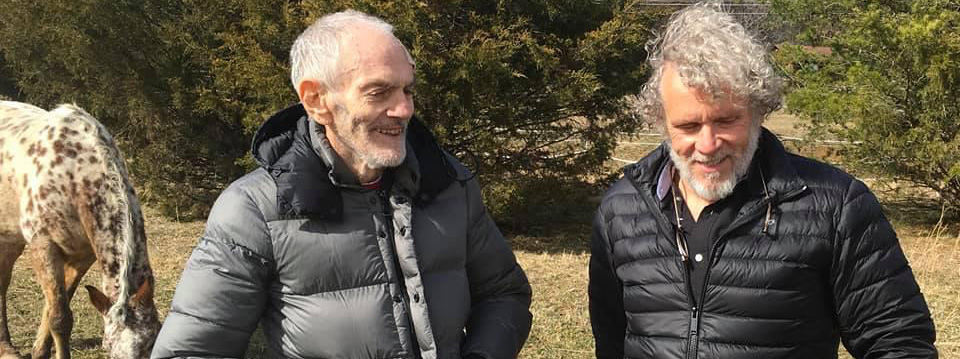
Dan Brule

Breath Mastery provides educational resources and online training focused on the art and science of conscious breathing and breathwork. The brand offers structured breathwork courses, guided practices, educational materials, and programs designed for students, practitioners, coaches, and experienced facilitators. Through accessible online learning, Breath Mastery helps participants develop a deeper understanding of breathing techniques, practical applications, and breathwork principles while supporting continued learning and personal practice from anywhere.

science of breathing9

Can You Become a Breathwork Practitioner Without a Medical Background?

By Blog No Comments

People ask me a lot whether they must have a medical degree to lead breathing sessions. For most, the answer is no. You do not need any medical training to begin. Breathwork practitioners use normal breathing techniques. It does not depend on clinical care, and it is not about giving drugs.

At Breath Mastery, we teach you how body awareness, breath control, and safety habits allow everyday people to transform lives. This guide breaks down how dedicated non-medical students learn nervous system basics, build practical coaching skills, and help clients find deep stress relief safely.

Understanding How the Human Breath Creates Real Physical Changes

You do not need to study complex medical books to understand how breathing changes the human body. Simple breathing patterns change oxygen levels and calm down an overactive nervous system fast. Deep belly breaths slow down a racing heart and lower stress hormones in minutes.

Most people walk around taking short, shallow breaths into their chest all day long. Teaching clients basic belly breathing helps them release tension without needing medical drugs. When you join a structured breathwork practitioner training program​, you learn basic anatomy concepts in plain language. You gain practical tools to show clients how intentional breathing lowers anxiety naturally.

  • Learn how slow breathing signals safety directly to the human brain
  • Help clients notice physical stress signs inside their own bodies
  • Guide people through basic nose breathing to improve everyday energy
  • Show students how deep exhalations release held physical tension fast

What You Actually Learn in Non-Medical Training Programs

Good training programs teach real coaching skills rather than confusing medical terms. You learn how to lead individual sessions and group workshops with clear verbal cues. Instructors show you how to set up peaceful rooms that make clients feel safe.

Completing a full Breathwork Certification program gives you hands-on experience before you accept paying clients. You practice leading sessions while senior teachers watch and give honest feedback. These practical training hours build your confidence far faster than reading heavy science textbooks ever could.

  • Master clear verbal instructions that keep clients calm and focused
  • Learn safe pacing techniques for both gentle and intense sessions
  • Recognize physical signs that show a client feels overwhelmed
  • Create supportive environments where people drop their emotional guard
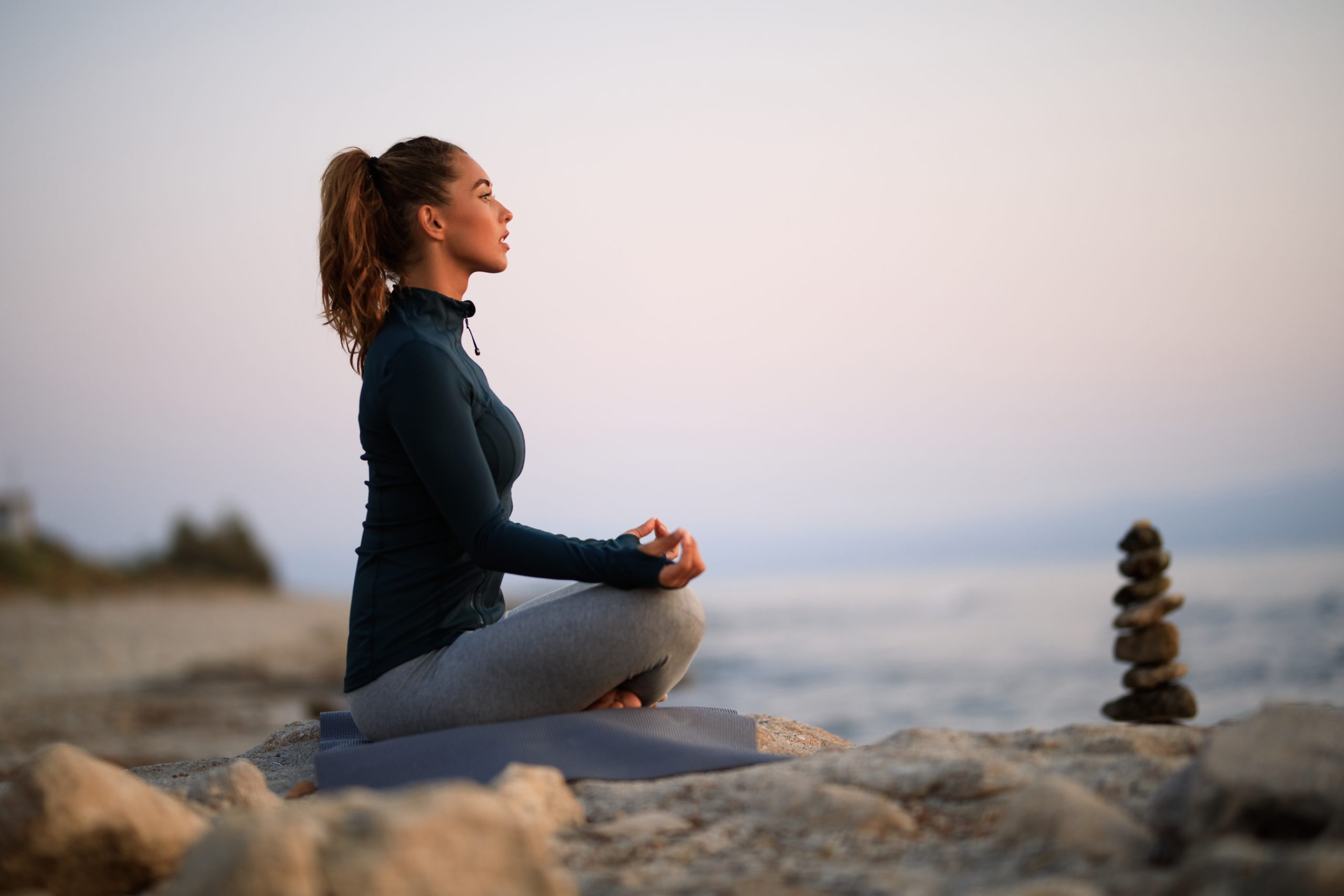
A woman sits in a cross-legged meditation pose on a rock by the ocean, near a small stack of balanced stones.Essential Safety Protocols Every Coach Must Always Follow

Working without a medical license means staying within clear safety boundaries at all times. Professional breath coaches never diagnose diseases or tell clients to stop taking prescribed medicines. You teach self-care tools that complement standard medical care safely.

  • Screen new clients for severe health conditions before starting sessions
  • Avoid fast hyperventilation methods with pregnant or frail clients
  • Keep emergency contact numbers ready inside your session space
  • Explain clearly that breath coaching supplements standard medical care

Wondering how to turn your passion for helping others into a rewarding breathing practice?

Explore Breath Coaching Options!

Building Personal Confidence as an Emerging Breath Guide

Many new teachers suffer from self-doubt when starting their professional journey. You might worry that clients will ask complex medical questions you cannot answer. Successful coaches simply explain that breathing techniques support natural wellness rather than cure clinical diseases.

  • Share your personal breathing story to build authentic client trust
  • Focus on active listening rather than trying to fix every problem
  • Practice simple techniques on friends to sharpen your verbal cues
  • Build a local network of health workers for easy client referrals

Launching Your Own Successful Breathing Business

Once you finish your core training, you can start offering public sessions right away. Many coaches rent space inside local yoga studios, gym rooms, or community halls. Others launch online group classes to reach clients living in different cities.

Completing comprehensive breathwork practitioner training gives you the tools needed to design profitable workshops. You can teach simple stress relief classes to busy corporate workers during lunch breaks. You can also host quiet evening sessions for people suffering from poor sleep habits.

  • Rent hourly space in local wellness centers to keep overhead low
  • Host free introductory workshops to show local people your style
  • Offer simple online sessions for clients who prefer home practice
  • Partner with local wellness professionals to cross-promote services

Growing Your Impact as a Trusted Breathwork Practitioner

Stepping into this career allows you to make a genuine difference in your community every week. You watch clients enter your room carrying heavy stress and leave feeling light and calm. Helping people regain control over their health provides deep personal reward.

At Breath Mastery, we help everyday people transform their passion into professional breathing practices. Our step-by-step methods give you real coaching tools without requiring years of medical school. As a certified Breathwork Practitioner, you can build a fulfilling business while guiding others toward better health naturally.

Conclusion

You do not need a medical degree or clinical background to build a thriving coaching career. Dedication, empathy, and proper safety training matter far more than medical titles. Choosing to complete breathwork practitioner training with Breath Mastery gives you the skills to guide clients safely. Step forward today and learn how a certified Breathwork Practitioner helps people transform their lives through simple breath control.

FAQs

Do you need a medical background to become a breathwork practitioner?

You do not need any medical background to start this rewarding career path. Breathwork training focuses on safe breathing techniques, nervous system relaxation, and practical client guidance. Good training programs teach you basic body awareness without heavy medical jargon. You learn practical skills that help everyday clients release stress and improve personal wellness safely without clinical degrees.

What qualifications do you need to become a certified breath coach?

You need to complete a recognized certification program from a respected training school. Quality courses require live practice hours, safety testing, and real client practice sessions. You need to study the right way to handle intake, and you should learn how to breathe safely. You also must know the basic steps to use in an emergency.

Can beginners enroll in a structured breath coach training program?

Beginners can enroll in introductory training courses without any prior professional experience. Most foundational programs welcome students who possess a personal passion for conscious breathing. Training modules start with basic principles before moving into advanced coaching methods. Instructors guide you through every step so you build strong confidence before working with public clients.

What core skills are taught during professional breath guide training?

Training programs teach you how to lead safe individual and group breathing sessions. You learn clear verbal cueing, room setup, music selection, and nervous system basics. Instructors show you how to screen clients for health risks and adjust techniques safely. You also learn practical business skills to help you market your new practice effectively.

How long does it take to complete a breath coach certification course?

Most certification tracks run about 3 months, and some stretch to a whole year. How long it takes can change based on how the course is set up, how much live practice you need, and how quickly you study on your own. Many programs mix at-home reading with weekend sessions that include hands-on work. They also require real client hours so you can apply what you learned.
What to Expect From a Professional Breathwork Training Program

What to Expect From a Professional Breathwork Training Program

By Blog No Comments

Taking a professional breathing class helps you practice in real situations. You also pick up solid knowledge about how the body works. In each session, you get clear safety steps so you stay steady while you try new techniques. You learn that small breathing changes can affect heart rate and help the nervous system settle. 

At Breath Mastery, our instructors help students run breathing sessions that feel alive and clear. They learn how to notice what the body is telling them. They also work on building coaching work that lasts. Taking a full breathwork teacher training course can help wellness coaches, yoga teachers, and therapists add more sessions to their day. They can do it with more confidence and a steadier plan.

Deep Diving into Breathing Science and Body Mechanics

Safe breathing work begins with noticing how breath affects body chemistry. Change the way you breathe and your blood flow can shift quickly. Oxygen levels may also move during the practice. While you keep working through the exercise, your brain chemistry may change as well.

Understanding Nervous System Triggers

Quick breaths can turn on your sympathetic nervous system. They help move out stuck body tension. Slow breaths from your belly can switch on your parasympathetic nervous system. This can bring down stress hormones. It can also help your heart rate settle on its own.

Learning these internal triggers allows facilitators to adapt sessions for individual client needs. Students observe how conscious breathing helps people process deep emotional stress safely without feeling overwhelmed.

Mastering Carbon Dioxide and Oxygen Levels

Shifting your breathing rate changes carbon dioxide levels inside your bloodstream directly. Controlled breathing techniques help balance blood pH levels, which increases mental focus and physical energy.

Students studying breathwork training​ learn how to guide clients through these body shifts safely. Teachers explain how simple breath holds increase carbon dioxide tolerance and improve overall physical stamina.

Three people sitting in a row, practicing meditation with eyes closed.Learning Core Methods and Hands-On Facilitation Skills
A good breathing session is not just a cue for inhale and exhale. The guide pays attention to how people sit, stand, and change their posture. They also tweak the music. That means the tempo and the overall mood. If a part starts to feel too intense, the guide comes in with a gentle touch and a calm check-in.

Guiding Individual and Group Sessions

Facilitators learn how to set up quiet, safe spaces that encourage people to drop their daily guard. Setting clear intentions before starting helps clients feel grounded and supported throughout the entire journey.

Teachers use verbal cues and music beats to guide participants through different breathing speeds. Learning to hold strong, neutral energy keeps the room safe while clients process deep physical releases.

Safe Hands-On Adjustments and Verbal Cues

Observing chest movements helps facilitators spot shallow breathing habits or physical tension immediately. Gentle hand placements on shoulders or ribs encourage clients to expand their lung capacity fully.

Enrolling in breathwork facilitator training teaches students how to give clear verbal directions without interrupting a client’s deep focus. Smooth vocal guidance helps participants stay relaxed and connected to their natural breathing rhythm.

Are you ready to deepen your personal practice and lead powerful breathing sessions for others?

Connect with Breath Mastery Today to Claim Your Training Spot!

Safety Standards and Emotional Support Guidelines

Safety forms the core pillar of any credible wellness program. Facilitators must know when to alter breathing patterns for clients facing specific medical or mental health conditions.

Screening Clients Before Sessions

Reviewing client health history forms prevents physical complications during intense breathing practices. People with heart conditions, high blood pressure, or recent surgeries need softer, gentler breathing patterns.

  • Medical Screenings: Identify physical health conditions that require quiet, low-intensity breathing exercises.
  • Emotional Readiness: Check if clients feel grounded enough to handle deep emotional releases comfortably.
  • Clear Space Rules: Keep emergency contact information and basic physical support tools nearby at all times.

Learning these safety rules during breathwork facilitator training online​ protects both the client and the practitioner. Clear screening steps give facilitators peace of mind when leading large public workshops.

Managing Emotional Integration

Deep breathing can bring old memories and suppressed emotions to the surface suddenly. Facilitators learn to help clients process these feelings smoothly using quiet voice tones and grounding touch.

Let people rest quietly for about ten to fifteen minutes after each session. This gives the body time to settle and adapt to the physical changes. Have them do grounding activities too. These help bring their heart rate back to a normal range. Then they can feel calm and alert again before they get in the car to go home. Completing a verified Breathwork certification program gives practitioners the proper tools to support client integration and manage deep physical reactions with total authority.

Two women sitting in a cross-legged meditative pose with their eyes closed in a yoga studio.Do you want to gain official credentials and launch your own successful breathing practice?
Partner with us to Begin Your Facilitator Journey!

Launching Your Path as a Skilled Breathing Guide

Becoming a certified breathing guide requires real dedication, deep body knowledge, and practical facilitation experience. Mastering conscious breathing techniques allows you to help clients release stress, regain physical energy, and improve mental focus naturally. 

If you enroll in Breath Mastery, you work with experienced mentors. They focus on safe breathwork practices, correct body use, and how to run a class well. Signing up for a breathwork teacher training where you will get the skills to guide strong sessions. You can also earn recognized credentials. This can help you start a solid wellness career.

FAQs

What is included in a professional breathwork training program?

A professional program includes deep body science, nervous system mechanics, and hands-on breathing techniques. You study how breathing shifts oxygen levels, blood chemistry, and physical stress stored inside muscles. The curriculum covers safety screenings, emotional release management, and class design for group workshops. 

How long does breathwork teacher training usually take?

Training length depends on how the course is set up and what you want for your career. Some programs focus on core skills and end in just a couple of weekends. Other certification routes take longer, often around half a year up to two years. Taking time allows practitioners to absorb core body mechanics and master complex facilitation techniques safely.

What skills do you learn during breathwork facilitator training?

Facilitator courses teach you to read physical body cues, adjust music rhythms, and deliver clear vocal cues. You learn how to guide clients through deep emotional releases without freezing or overreacting. Training covers client health screenings, emergency protocols, and space preparation. You also learn business foundation steps, including session pricing, ethical client communication, and workshop promotion across local community networks.

Does breathwork training include practical or supervised sessions?

Yes, legitimate training programs place heavy emphasis on practical, supervised sessions. Students complete dozens of one-on-one sessions and group classes while logging detailed practice reports. Master trainers observe your vocal directions, body language reading, and hands-on adjustments during live meetings. Receiving direct feedback from experienced mentors ensures you handle unexpected client emotional releases smoothly and build real facilitation confidence.

Can I complete breathwork facilitator training online?

Yes, modern online options deliver complete facilitator programs through virtual learning platforms. Digital courses combine video lectures, downloadable manuals, weekly live group calls, and peer mentoring sessions. Students record their practice sessions with test clients and submit video reports for review. Online formats allow you to master breathing mechanics, safety protocols, and class leadership skills at your own pace.

Person seated cross-legged on a meditation cushion with one hand on the chest and one on the belly, practicing mindful breathing in a sunlit meditation hall

Buddhist Principles in Breathwork and Life

By Articles No Comments

Buddhism offers a rich understanding of how to meet whatever comes up in a breathwork session—and how to carry that understanding into daily life. Those of you who have trained with me know that we need to practice non-judgment, non-resistance, and non-attachment in a Breathwork session.

Breath Awareness—the first and most basic aspect of Breathwork—is called Mindfulness of Breathing in the Buddhist tradition. And it involves calmness, joy, and letting go. In Breathwork as well as Buddhist breathing practice, we learn to sense details in the breath and we become more conscious of the reactions of our body-mind system.

Read More
A peaceful person breathing as a flowing ribbon shifts from cool blue to warm gold across the body.

Working with Intention During a Breathing Session

By Articles

Most people think of intention as something you set at the beginning of a breathing session. “What do I want?” “What am I working on?” “What do I want to heal, change, release, create, or experience?” We form the intention, say it to ourselves, and then begin breathing. But there is a much more powerful way to work with intention.

Instead of setting an intention once and then forgetting about it, we can breathe the intention. We can use every conscious breath to form it, energize it, deepen it, release what stands in its way, and experience its fulfillment. Think of each breath as a prayer. The inhale forms the prayer. The exhale receives the answer. And then we do it again. And again. And again.

Read More
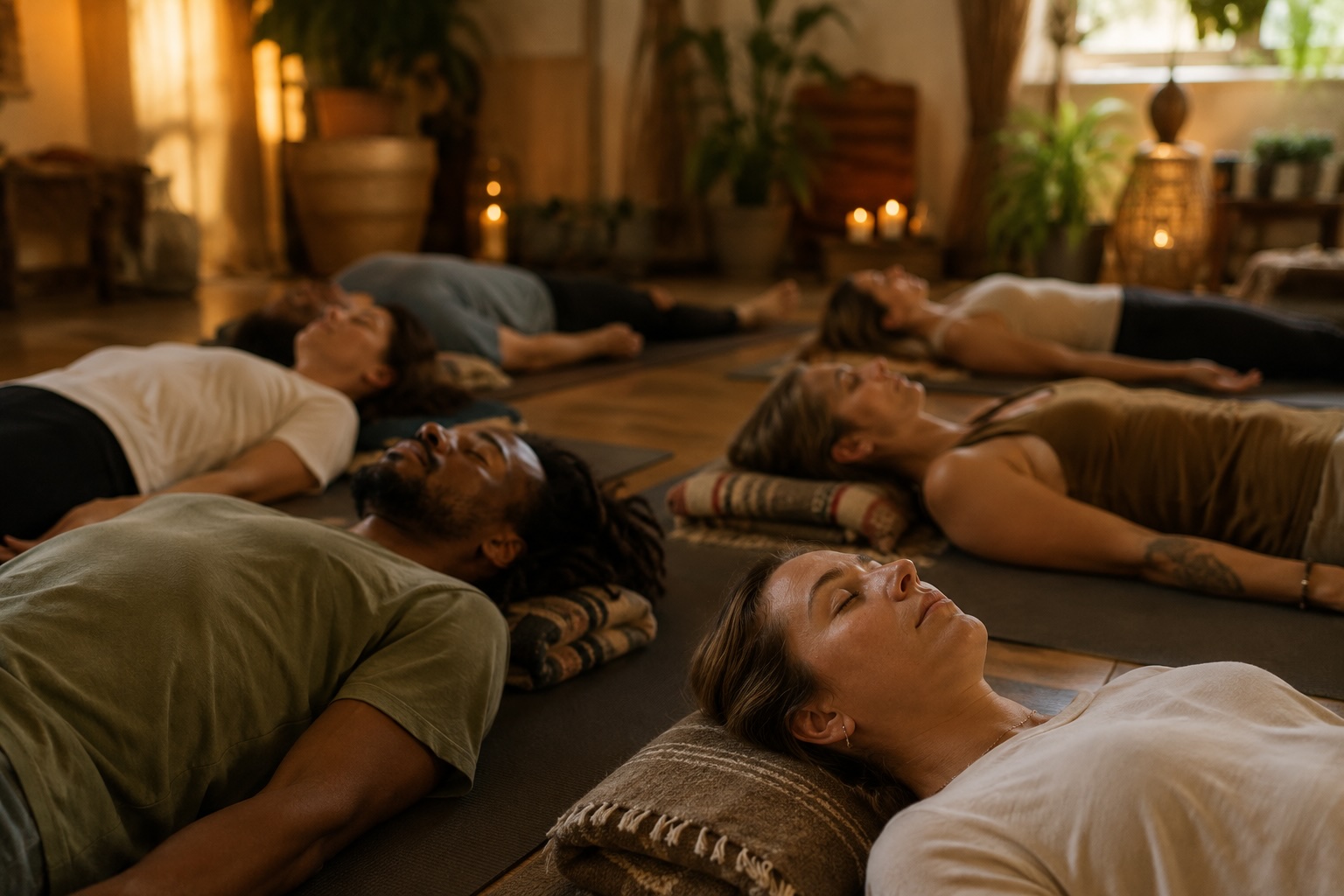
A group of people lying on yoga mats with their eyes closed in a dimly lit room

The Invisible Relationship & The Mirror Between Us

By Articles

People often ask me, “Dan, after fifty years of teaching breathwork all over the world, what’s the most important thing you’ve learned?”

Most expect me to talk about a certain breathing technique or practice. Instead, I usually tell them this: Breathwork isn’t just about breathing. It’s about relationships. Your relationship to your breath, to yourself and others, to life and the world.

Read More
Breathing loop

How the Way You Breathe Can Create or Eliminate Stress & Anxiety

By Articles

We have been focusing on the spiritual benefits of breathwork a lot recently, but I don’t want you to ignore the chemical effects of breathing on your mental and physical wellbeing, or how it influences your chemistry when you’re stressed or anxious. And so this month, let’s dig into this a bit.

Breathwork is important during times of mounting pressure, rapid change, and major life challenges. When you experience uncertainty, feel numb or paralyzed by fear, or when it seems your life is falling apart, breathwork can come to the rescue!

Read More
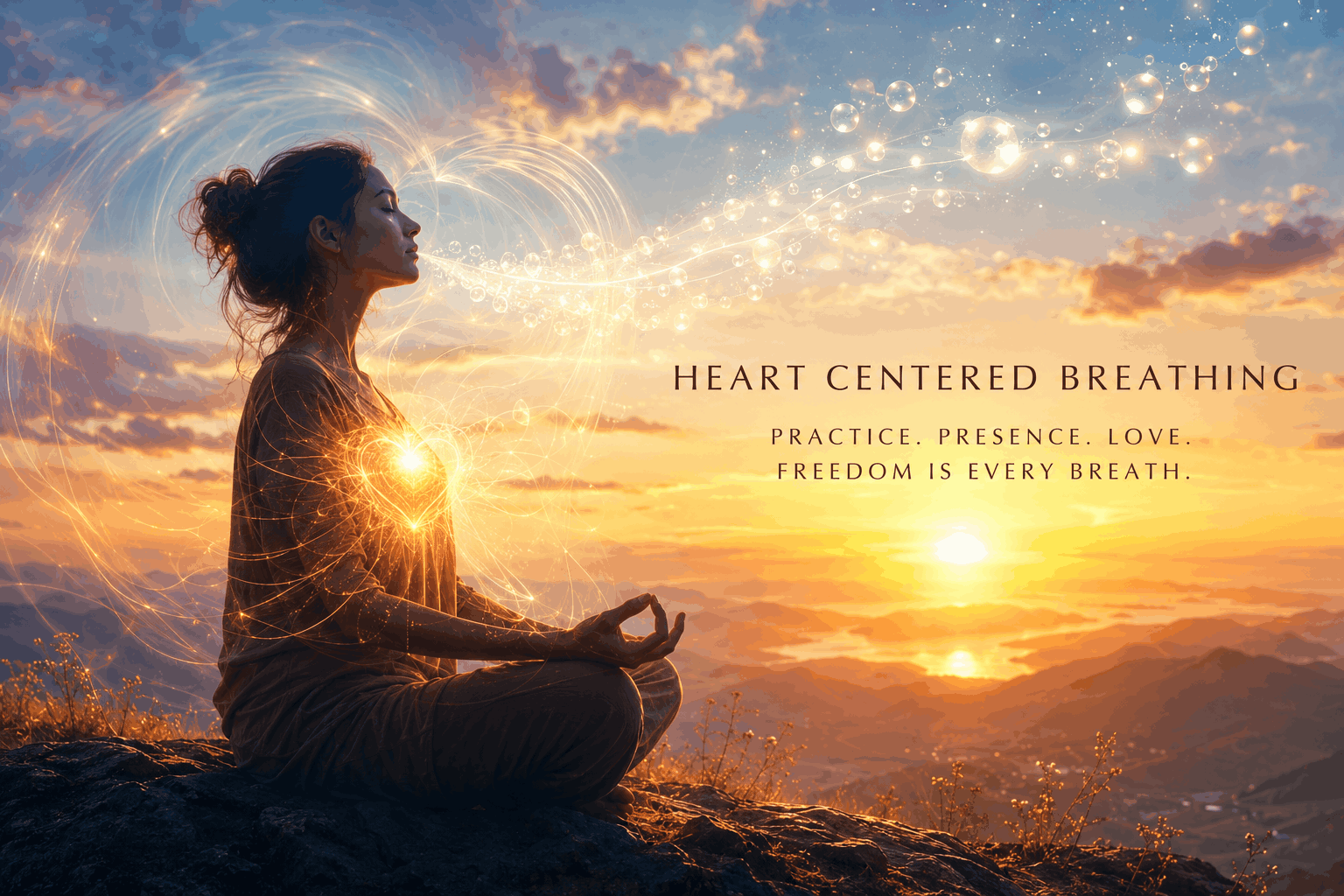
Heart Centered Breathing woman meditating

Heart Centered Breathing

By Articles

Something has been happening in me and around me recently… It’s difficult to describe or put into words, but it is becoming ever so real and unavoidable, inescapable ever-present and growing…

It’s a freedom. It’s a spaciousness. It’s an experience of breathing bubbles of light instead of molecules of air. It’s an overwhelming sense of love and clarity, of profound peace, of deep gratitude and appreciation, of causeless joy that needs no expression.

Read More
A Person standing in an open field with arms open as they perform Breathwork to Expand & Raise Consciousness

Breathwork to Expand & Raise Consciousness

By Articles

This month, we are focusing on using Breathwork to expand our awareness and raise our consciousness.

Are you ready? That’s not a rhetorical question. Ask and honestly answer it for yourself. Because some people may not be ready, willing or able to do this vital inner work.

Read More
Calm, blue water with gentle ripples and light reflecting on the surface under soft, bright daylight.

Breathwork in Warm and Cold Water

By Articles

Breathing in both warm and cold water have been powerful practices in Rebirthing and the Breathwork Movement since the earliest days. In fact, Rebirthing started with warm water sessions, but we soon learned that the water brought up too much too fast for most people, and so everyone was encouraged or required to do ten ‘dry’ sessions before going into water.

Warm water sessions recreate a womb-like environment that can evoke experiences of profound relaxation, ecstatic bliss, deep ancestral and generational healing, spiritual awakening, mystical states of oneness, wholeness and cosmic union.

Read More
A woman lies on a mat with her eyes closed, appearing relaxed, as a glowing brainwave graphic is superimposed above her head.

NSDR: The Art of Conscious Renewal

By Articles

From the moment most people get up in the morning, they are busy with work and life, and they are forced to deal with constant stimulation. The only rest they ever get is sleep. And even that is not often sound or restful.

But there is a powerful middle ground between wakefulness and sleep known as Non-Sleep Deep Rest (NSDR)—which is a modern term for an ancient practice called Yoga Nidra. And that is the topic of this month’s article.

Read More
Illustration of a woman with long dark hair meditating in a cross-legged position, eyes closed, with abstract swirl lines and dots in the background.

Breathwork and Human Potential

By Articles

This past June, Croatian freediver Vitomir Maričić held his breath underwater for 29 minutes and 3 seconds! And that got me thinking about what this means in our own lives and what we can take away from this extraordinary example of human potential. And so I’d like to share some of my take-aways.

Vitomir Maričić’s breath hold doesn’t belong only to the world of sport. It belongs to an ancient lineage of humans who learned that breath is not just air–it’s leverage. Yogis used it to still the mind. Monks used it to survive the cold. Warriors used it to stay clear in combat. Modern freedivers use it to renegotiate the limits of oxygen and fear. Different aims. Same doorway.

Read More
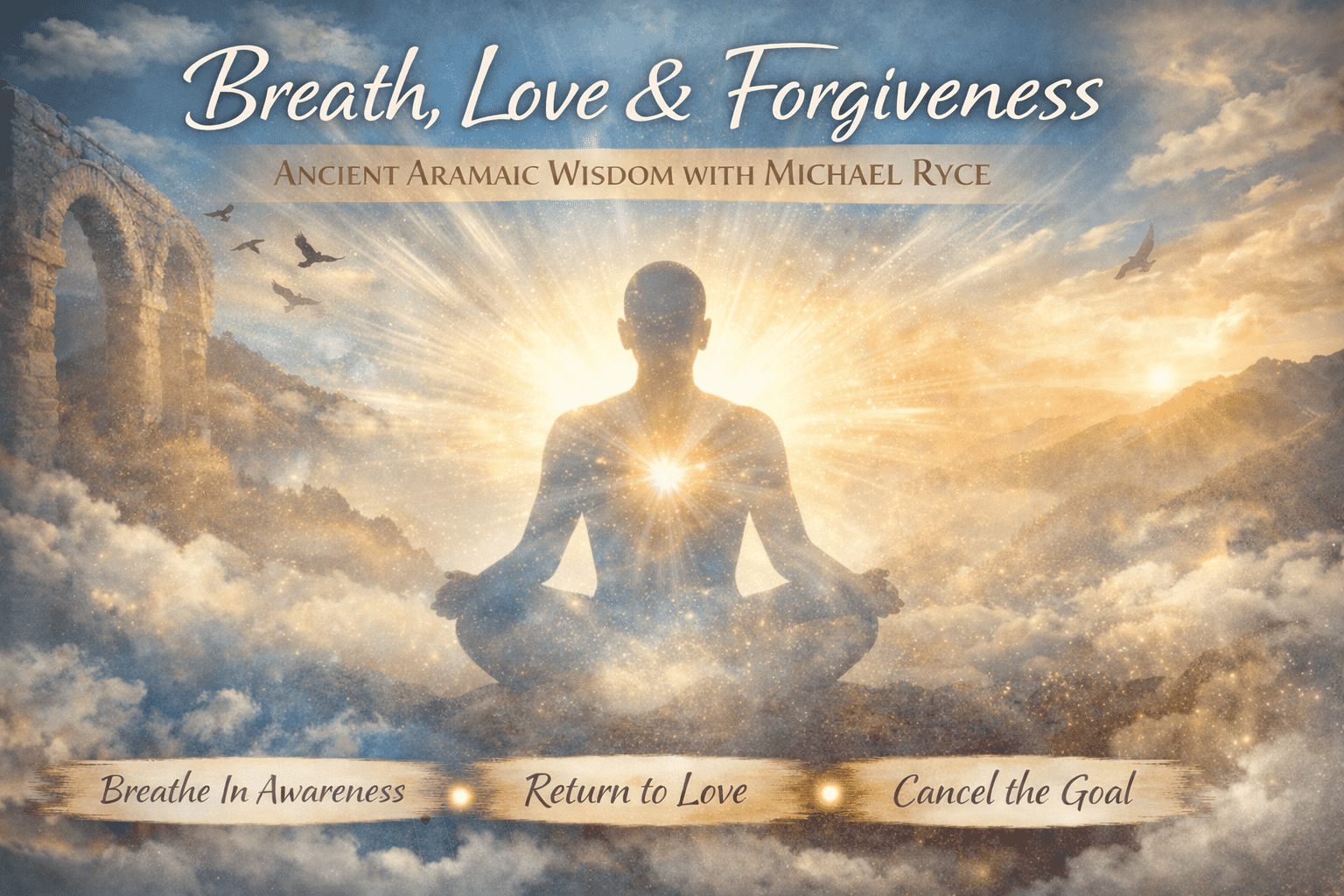
A silhouetted figure meditates with a glowing heart, surrounded by clouds, birds, and sunlight; text promotes "Breath, Love & Forgiveness" and related practices.

Notes on my Recent Meeting with Michael Ryce

By Articles

I recently spent two days in Virginia with Michael Ryce. He is an Aramaic scholar and the author of Why is this happening to Me…Again! Connecting with him is like breathing ancient wisdom through fresh lungs.

He has been such an inspiration to me over the years, and it was a gift to be able to exchange sessions and spend some quality time with him. So, this month, I’d like to share with you some of the insights and lessons I took away from our meeting.

Read More
The words "JUST BREATHE" are written in the sand near the water's edge on a beach.

The Art of Energy Breathing

By Articles

Recently, I’ve been working on a seminar/workshop for teams, whether in the Health, Sports, Creative, Tactical or Business field. The focus is on applying Breathwork to create group resonance and group flow. The art and science of triggering individual flow states is well established, so it seems to me that group flow is the next natural step.

We aim to trigger a spontaneous, unconscious, energetic connection or synchronicity among individuals–a shared emotional and psychological experience, where personal egos dissolve and everyone seems to meld into a single organism and a “group mind.”

Read More
Eight people in business attire sit in a circle with eyes closed, appearing to meditate, with digital light effects encircling them in a modern office with large windows.

Breathwork with Teams: Creating Group Flow

By Articles

Recently, I’ve been working on a seminar/workshop for teams, whether in the Health, Sports, Creative, Tactical or Business field. The focus is on applying Breathwork to create group resonance and group flow. The art and science of triggering individual flow states is well established, so it seems to me that group flow is the next natural step.

We aim to trigger a spontaneous, unconscious, energetic connection or synchronicity among individuals–a shared emotional and psychological experience, where personal egos dissolve and everyone seems to meld into a single organism and a “group mind.”

Read More
A girl holding a red leash smiles at a large, menacing shadowy creature with sharp teeth.

Patience, Presence and Compassion in Breathwork— and in Life!

By Articles

We are nearing the close of our 2025 India Adventure. It’s been a profound Spiritual Breathing Training and Cultural Immersion Tour. These journeys are always intense. India has a way of stripping us down, inviting us to let go, while Breathwork offers us a way to flow with whatever arises.

This adventure has given us an opportunity to practice patience, to embody compassion, to live more fully, and be more present. Whenever a group of strangers comes together, living, working, and breathing side by side, differences in lifestyle, personality, and worldviews are bound to surface. Conflicts emerge. But it’s been wonderful to watch everyone lean into love, honesty, patience, and authenticity.

Read More

Pin It on Pinterest